
An integrated heat pump hot water system beside a weatherboard home and garden

How We Review Heat Pump Hot Water Systems

We do the research, so you can make a more informed choice.

Choosing a heat pump can be confusing.

There are dozens of brands, different tank sizes, COP figures, warranties, refrigerants, noise ratings and rebate claims — and it's not always easy to work out what actually matters.

That's where we come in.

We assess heat pump hot water systems based on the things we believe matter most to Australian homeowners, explain the strengths and compromises in plain English, and give you our view on who each system is best suited to.

Rather than giving products an arbitrary score out of 10, the heat pumps we recommend are placed into one of three simple tiers: Mid, Upper or Premium.

Our Recommended Heat Pump Tiers

Premium Tier

Our premium heat pump recommendations

These are systems that stand out for their overall combination of engineering, performance, construction, technology, warranty, support or ownership experience.

Premium systems can cost considerably more than other good heat pumps, so Premium doesn't automatically mean best value.

For some homeowners, the additional technology, engineering or flexibility will be worth paying for. For others, an Upper Tier system may make more sense.

Best suited to: Homeowners looking for a premium heat pump solution and comfortable paying more for it.
Upper Tier

Our highly recommended heat pumps

These are strong all-round systems that perform very well across the areas we assess.

They generally combine good efficiency and performance with strong warranties, quality construction, practical features and good ownership support.

For many Australian households, this is where we'd start looking.

Upper Tier systems can provide an excellent balance between product quality, performance and price without necessarily carrying the cost of a Premium system.

Best suited to: Homeowners looking for a high-quality heat pump with a strong balance of performance, features and value.

Mid Tier

Good heat pumps we're comfortable recommending

Mid Tier systems are products we consider worth recommending, but they generally come with more compromises than our Upper and Premium choices.

That could mean fewer tank sizes, slower recovery, a more basic warranty, fewer smart features, higher noise levels or a simpler overall specification.

That doesn't make them poor heat pumps.

If those compromises aren't important to your household — particularly if the installed price is attractive — a Mid Tier system can still be a very sensible choice.

Best suited to: Homeowners looking for a good heat pump while keeping a closer eye on budget.

What If a Heat Pump Doesn't Have a Tier?

You'll find other heat pumps on our website that don't have a Mid, Upper or Premium Tier classification.

We still provide information about these products so you can understand their specifications, features, advantages and limitations.

However, if we haven't assigned a tier, that product isn't currently included among our recommended heat pumps.

That doesn't necessarily mean it's a bad product or that it won't work in your home. It simply means it hasn't met our criteria for inclusion in one of our recommended tiers.

How Do We Decide?

We look beyond the marketing brochure and assess each heat pump across five important areas.

1. Performance & Efficiency

We consider how efficiently the system heats water, how quickly it can recover after hot water has been used, its operating range and whether it can make effective use of rooftop solar.

2. Warranty & Reliability

We look beyond the headline warranty period and consider what's actually covered — including the tank, heat pump components, compressor, parts and labour — along with construction and other reliability factors.

3. Tank Size & System Design

We consider available tank sizes, household suitability, all-in-one versus split designs, electrical requirements and how practical the system is to install.

4. Noise, Refrigerant & Safety

We consider operating noise, refrigerant type, temperature capability, safety features and water-hygiene functions.

We also look at how specifications are measured. For example, a noise figure measured at 1 metre shouldn't automatically be compared with one measured at 1.5 metres as though they're the same.

5. Support & Value

We consider Australian support, warranty handling, access to parts, installer familiarity, applicable rebate programs and what you're actually getting for the price.

We Assess Products, Not Just Brands

A brand name alone doesn't determine our recommendation.

The same manufacturer can offer an entry-level heat pump and a completely different premium system.

That's why we assess individual products or closely related product ranges, rather than automatically assigning one tier to an entire brand.

You may therefore see two products from the same manufacturer sitting in different tiers.

We think that's a fairer and more useful way to compare heat pumps.

Premium Doesn't Always Mean Better for You

This is important.

A Premium Tier heat pump could cost thousands of dollars more than a strong Upper Tier alternative.

The Premium system may genuinely offer better engineering, different technology, superior construction or greater installation flexibility.

But you may not need those advantages.

For one household, paying more for Premium may make complete sense.

For another, an Upper Tier system may provide everything they need for considerably less money.

And for someone working within a tighter budget, a good Mid Tier system may be the smartest choice.

Our job isn't to steer you towards the most expensive heat pump. It's to help you understand what you're paying for.

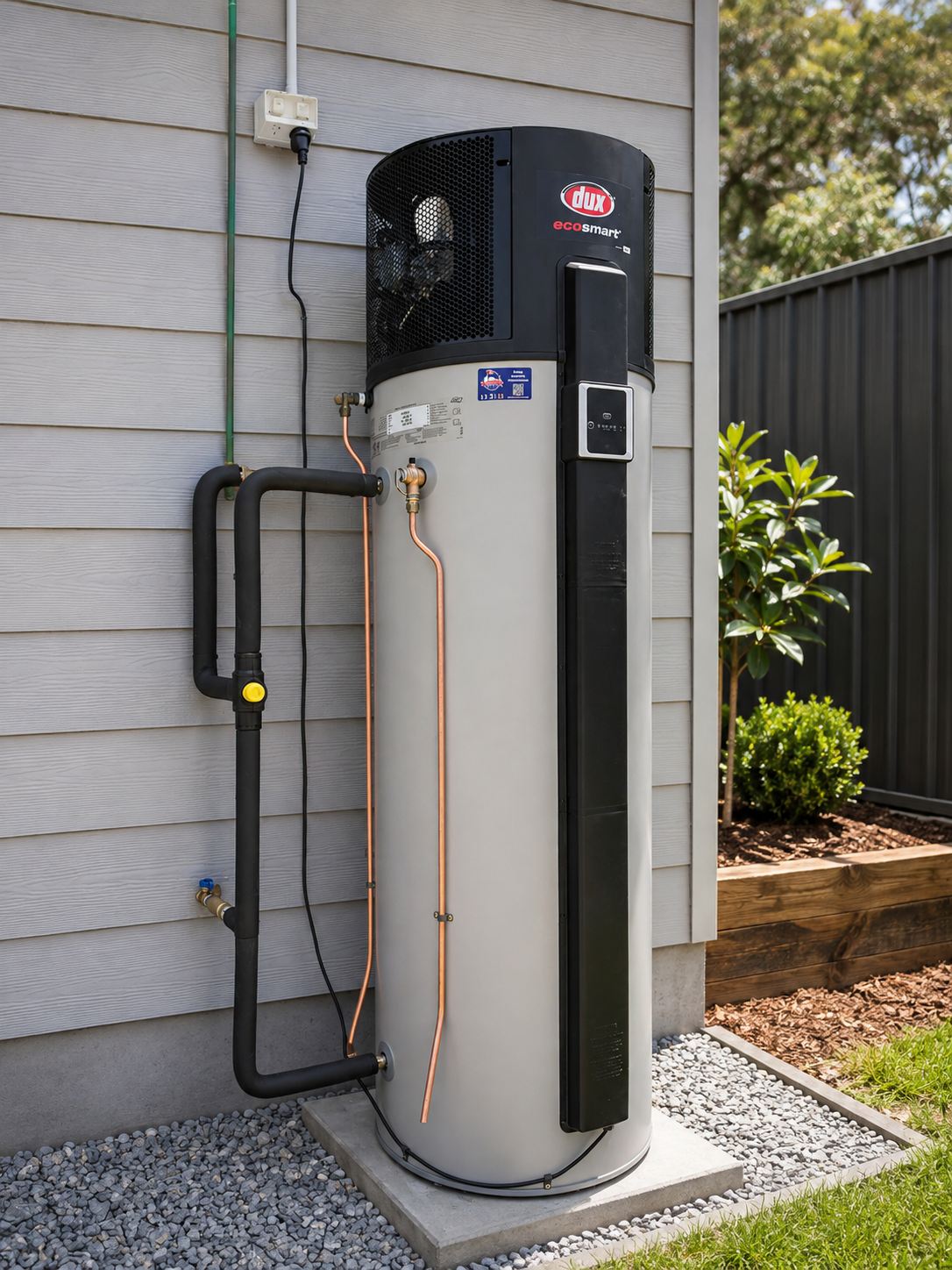
Heat pump hot water tank installed in a compact side yard beside an Australian home

Tier, Value and Verdict — What's the Difference?

We separate three things when reviewing a heat pump:

Tier
tells you where we believe the product sits based on its overall quality, capability and ownership proposition.
Value
considers whether what you're getting makes sense relative to the price.
Our Verdict
is where we give you our opinion — including who we think should consider the system and who may be better suited to something else.

A Premium system can therefore be the better product, while an Upper Tier system could still be the better buy.

There's No Single “Best” Heat Pump

The right heat pump depends on your home.

A system that's ideal for a couple with rooftop solar may not be the right choice for a family of six with heavy morning and evening hot-water use.

We consider factors such as:

That's why our reviews don't simply tell you which heat pump is best.

They help you understand which heat pump may be best for you.

  • Household size
  • Hot-water usage
  • Tank capacity
  • Recovery speed
  • Climate
  • Installation location
  • Solar
  • Budget
  • Warranty and support
  • Available rebates

What You'll Find in Every Heat Pump Review

We keep our individual product reviews straightforward.

You'll see the product's tier, important specifications, what we like, what we'd consider before buying, who we think it's best suited to, value considerations and finally our verdict.

Where manufacturers publish specifications under different testing conditions, we'll point that out rather than making misleading comparisons.

And where reliable information isn't available, we'd rather tell you we don't know than fill in the gaps.

Ready to Compare Heat Pumps?

Explore our heat pump reviews to see which systems have earned our Mid, Upper and Premium Tier recommendations.

Once you've narrowed down your options, you can request up to three quotes from local installers to compare the heat pump, installation scope, available rebates and final installed price.