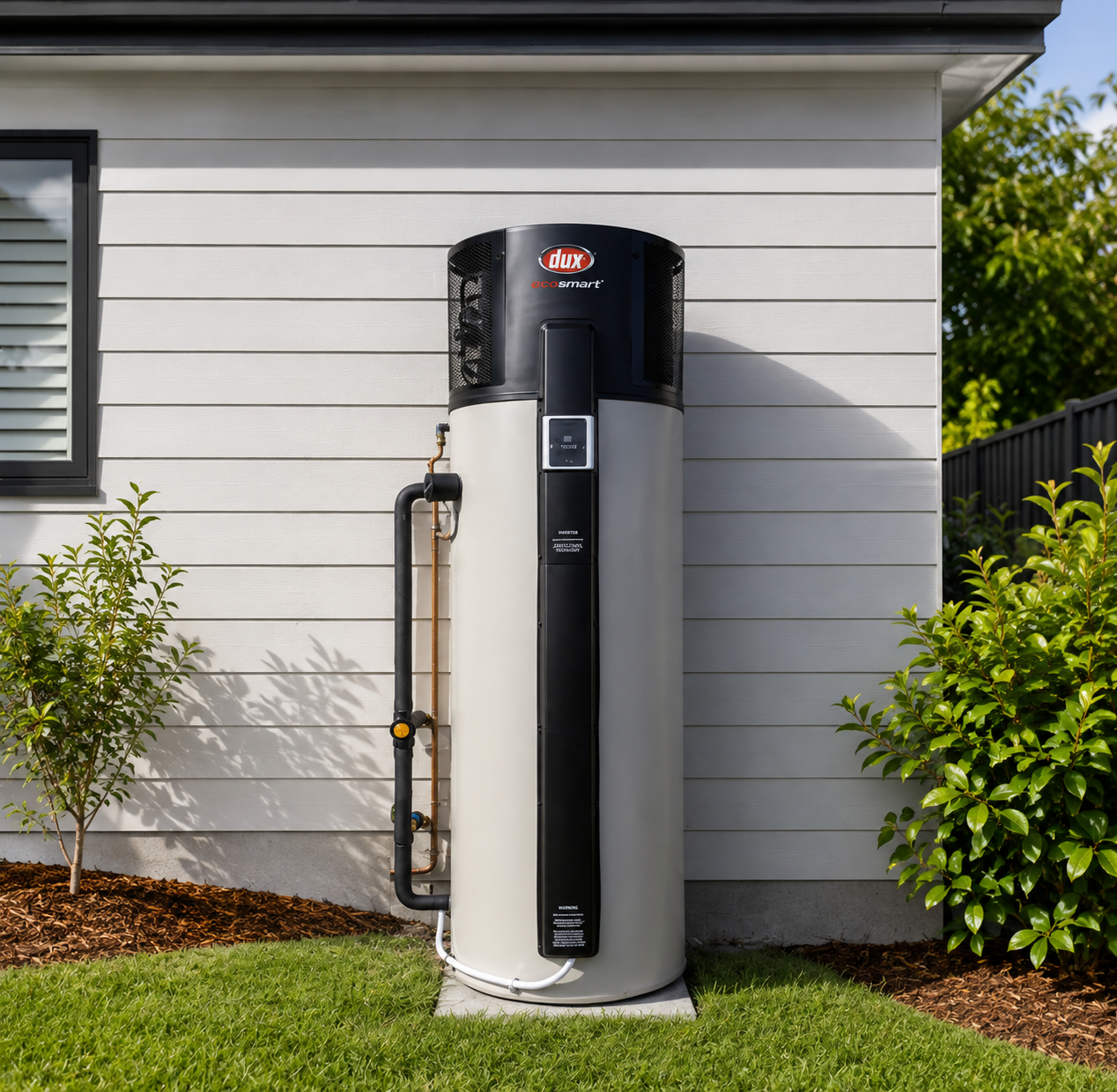
What Is A Heat Pump Hot Water System?
A heat pump hot water system is a way of heating the water in your home that uses far less electricity than a standard electric hot water tank. Instead of using an element to heat water directly (like a kettle does), it works more like a reverse fridge. It pulls warmth out of the surrounding air and uses that heat to warm the water in your tank.
Because it's moving heat rather than creating it from scratch, it uses roughly two to three times less electricity than an old-style electric hot water system. For most Australian households, that means real savings on power bills every single quarter.
Why Homeowners Are Switching To Heat Pumps
Lower running costs — typically 60–70% cheaper to run than an electric resistive system
Works day or night, rain or shine — unlike solar hot water, it doesn't rely on direct sunlight
Pairs perfectly with solar panels — run it during the day for close to free hot water
Better for the environment — uses less electricity, so a smaller carbon footprint
Government rebates are available in most states, lowering the upfront cost
Is A Heat Pump Right For Your Home?
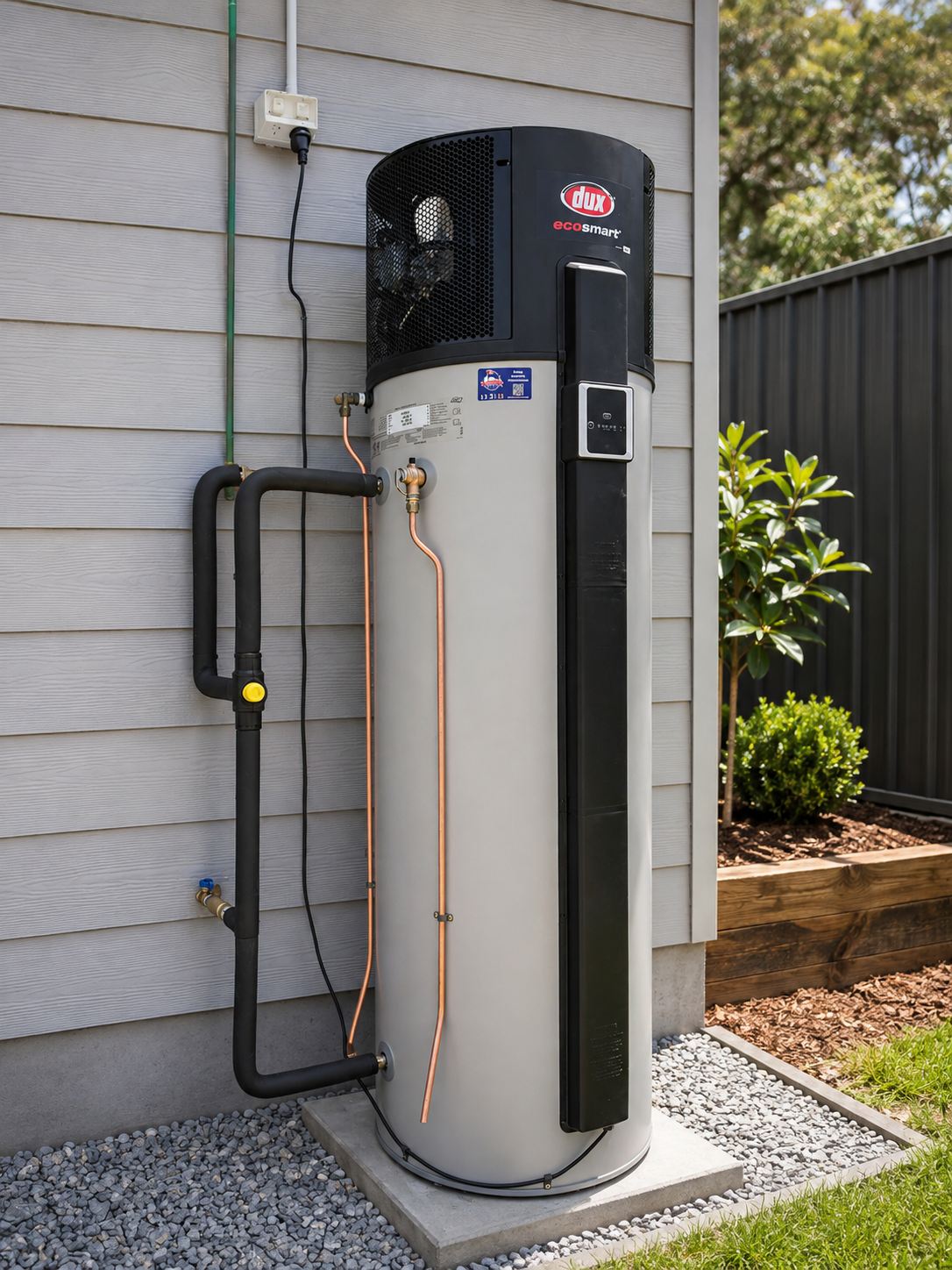
Heat pumps suit almost every home, but they work best when there's a bit of outdoor space with airflow for the unit to sit (like a side yard or under an eave). If you already have solar panels, a heat pump is one of the best ways to make the most of the power you're generating during the day.
If you're replacing an old electric or gas hot water system that's reaching the end of its life, a heat pump is usually the most cost-effective long-term option available today.
What This Guide Covers
Use the links below to jump to the topic you care about most:
- How heat pump hot water systems actually work
- What they cost to buy, install, and run
- Rebates and incentives available in your state
- How the top brands compare
- What size system your household needs
- How they compare to solar, electric, and gas hot water
- What installation day looks like
- Maintenance and warranty information
A Quick Bit Of History
Heat pump hot water technology isn't new. The same basic idea has been used in refrigerators and air conditioners for decades. What's changed is that manufacturers have refined the technology specifically for hot water, made units quieter, improved cold-weather performance, and brought prices down enough that they're now genuinely affordable for the average household, not just a niche option for the eco-conscious.
Common Myths About Heat Pumps
Myth: "They don't work in winter."
In reality, modern units are designed to keep drawing heat from the air even on cold mornings.
Myth: "They're too noisy to have near the house."
Most modern units run at a level similar to a quiet air conditioner and can be positioned away from windows if noise is a concern.
Myth: "They're only worth it if you have solar panels."
They save money on running costs whether or not you have solar. Solar just makes them even cheaper to run.
Myth: "They're complicated to maintain."
Day-to-day, they need no more attention than a standard hot water system. Just a periodic professional check.
What Homeowners Say Matters Most
Talking to homeowners who've already made the switch, the same few things come up again and again: how much their power bill dropped, how quiet (or not) the unit turned out to be, how smoothly installation day went, and whether their installer was upfront about rebates. This guide and the rest of this site is built around answering exactly those questions honestly, in plain language, before you commit to buying.
Get A Free Quote
Every home is different, and the right system depends on your household size, roof space, budget, and location. Rather than guessing which brand or size is right, it's worth getting a proper recommendation based on your specific situation.
Get 3 free quotes